

I'm a Gut Doctor - I eat these foods (Budget edition)
Good gut health does not need to be expensive

If you have read my Substack long enough, you know I think about food as medicine.
Salmon and avocado on sourdough is wonderful for your gut. It is also pretty expensive.
I am conscious of that.
Most of us are not shopping in a world of wild-caught fillets and organic berries.
We are shopping on a budget, in a hurry, after a long day.
So here are some healthy and affordable options I personally reach for.
BIG disclaimer: every food here has a drawback or two. That is partly why they are affordable. But the positives far outweigh the negatives, and this article will be mostly positive. My aim is simple: to get people eating healthier, whatever the budget. If you can afford pure organic whole foods, that’s great. Please read along, but don’t judge. Thank you.
You can check out my full Substack here
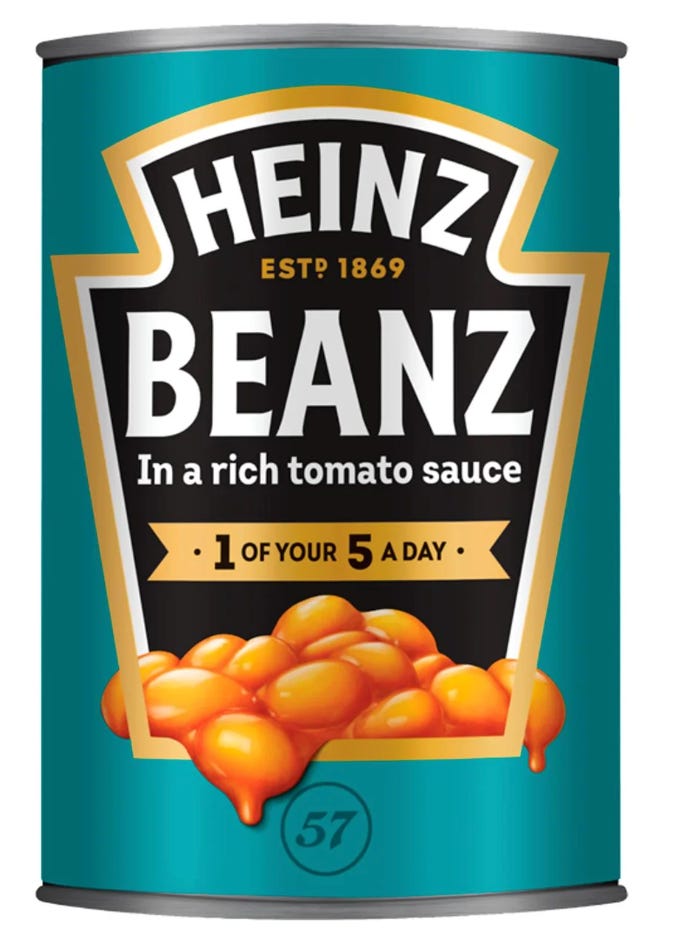
1. Baked beans: A British staple!
God bless baked beans!
A tin of value baked beans costs about 40p.
For that you get fibre, plant protein and one of your five a day.
Half a tin gives you roughly 10g of protein, similar to two small eggs, plus around 4g of fibre.
Most of us in the UK fall short of the 30g of fibre a day we should be eating, and beloved baked beans closes that gap!
The evidence for legumes is genuinely good.
A dose-response meta-analysis of 26 studies found that the highest legume eaters had a 10% lower risk of coronary heart disease compared to the lowest, with the benefit levelling off beyond 400g a week.
A randomised controlled trial in people with type 2 diabetes found that a daily cup of legumes for three months improved blood sugar, and reduced weight, waist size, cholesterol and blood pressure.
Then there is the gut.
In the BE GONE trial, 55 high-risk patients added a cup of navy beans to their usual diet, and their microbiome diversity rose measurably, feeding beneficial bacteria such as Faecalibacterium and Bifidobacterium while crowding out the less friendly ones.
My honest opinion? Baked beans on brown bread with a little grated cheddar is a complete, balanced meal. I stand by it.
A final note: some brands are high in salt and sugar. Check the label and pick a reduced-salt or no-added-sugar version where you can.
2. Canned tuna: my university go-to!
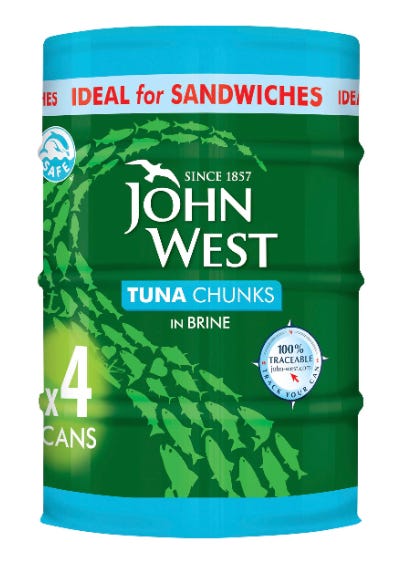
I ate tinned tuna as a broke student. I still eat it now! Old habits don’t fade!
A multipack works out at well under a pound a tin, and each tin delivers around 25 to 30g of lean, high-quality protein.
For the price, almost nothing beats it.
Canned tuna is NOT classed as an oily fish in UK guidance, because processing strips out much of the oil.
Fresh salmon or mackerel carry far more. So enjoy tuna for its protein, not as your omega-3 source.
I brighten mine with a little chilli sauce, or a small spoon of mayonnaise. Cheap, fast, satisfying.
A side-note: mercury (what’s the bet someone mentions this in the comments?). Tuna is larger and longer-lived than most tinned fish, so it accumulates more. For most adults there is no strict limit, but if you are pregnant or trying to conceive, the advice is no more than four medium cans a week, at about 140g drained weight each.
3. Bananas: simple energy
A single loose banana costs pennies.
Bananas are rich in soluble fibre, particularly pectin, which softens stool and helps things move.
Greener, firmer bananas also carry resistant starch, a prebiotic your gut bacteria ferment into helpful compounds.
Riper bananas are gentler and sweeter; greener ones feed your microbes more.
They are also a good source of potassium, which matters for blood pressure. A dose-response meta-analysis of randomised trials found that raising potassium lowers blood pressure, with the effect strongest in people who already have hypertension and those eating a lot of salt.
Easy to digest, easy to carry, easy on the wallet. A near-perfect snack.
Side note: very ripe bananas are higher in sugar, so those watching blood glucose should lean towards firmer fruit. However, there are FAR worse foods you can eat for rising your blood glucose!

4. Frozen mixed vegetables: Absolute no brainer
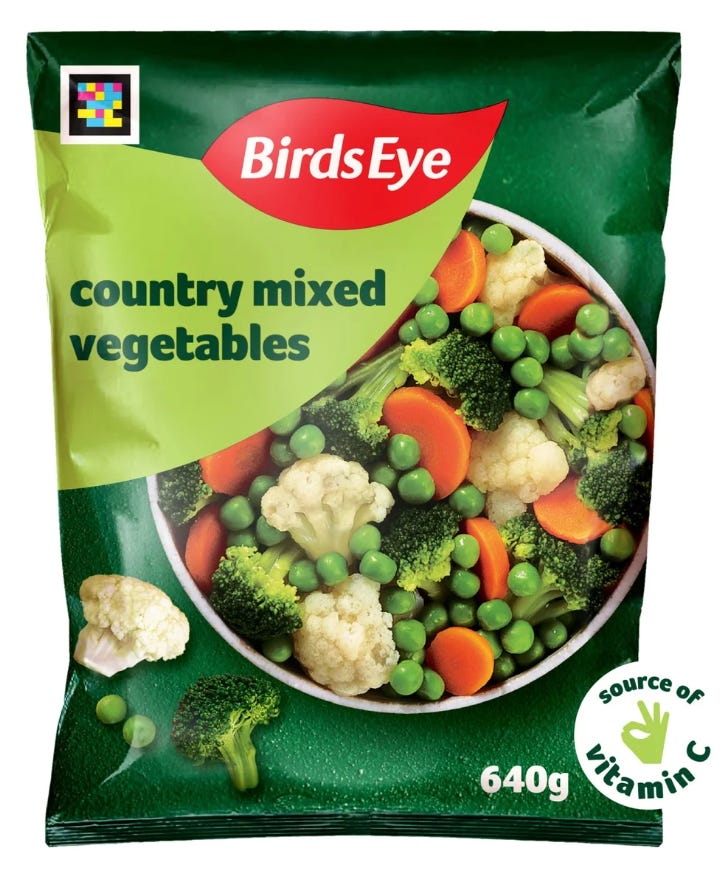
I keep a bag of frozen mixed vegetables in the freezer at all times.
Carrots, peas, sweetcorn, green beans, broccoli in one bag!!
A 1kg bag costs a little over a pound and lasts for months.
Here is the myth worth killing: frozen is not the poor relation of fresh. Vegetables destined for freezing are picked at their peak and frozen within hours, locking in nutrients.
Meanwhile “fresh” produce can sit for days losing vitamins. Studies comparing the two find no meaningful difference in most nutrients, and frozen sometimes wins.
Vegetables are among the best-evidenced foods we have.
In a large analysis of roughly two million adults, eating five servings of fruit and vegetables a day was linked to a 13% lower risk of death compared with two, with the sweet spot around two servings of fruit and three of vegetables.
Frozen makes hitting that target cheap and effortless.
Boil, steam or microwave straight from frozen. No waste, no wilting, no guilt.
Side note: No drawbacks in my opinion. however, skip the ones bagged with cheese sauce or seasoning, which sneak in salt. Buy plain and season yourself.
5. Eggs: come on, you knew this was coming
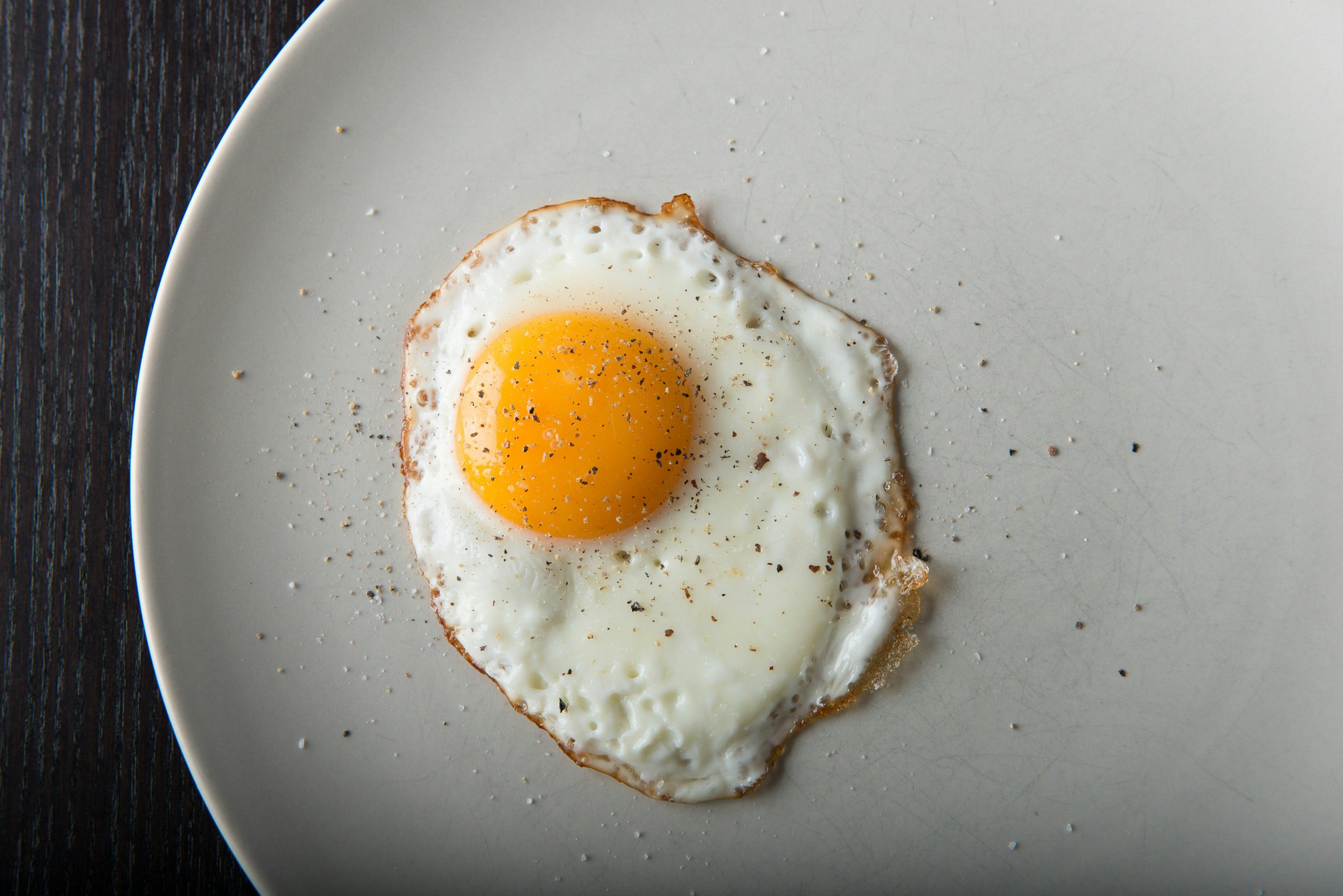
Of course eggs.
If you have read my articles before, you saw this one arriving from a mile off.
Yes, there is a price range, from budget boxes to fancy free-range.
But even a decent tray works out at pennies per egg, for one of the most complete foods on the planet.
The benefits are almost endless.
Eggs offer complete protein with all nine essential amino acids, and one of the highest protein quality scores we measure. They carry choline for the brain, around 130mg in a large egg, plus lutein and zeaxanthin for the eyes, and vitamin D, B12 and selenium.
Remember the cholesterol panic? The sad egg-white omelettes?
The research has largely moved on. In three large US cohorts and a meta-analysis of over 1.7 million people, eating up to one egg a day was not associated with cardiovascular disease risk in most people.
So eat the yolk. That is where most of the nutrients live. Binning it is the real waste.
Side note: a small number of people are genuine cholesterol hyper-responders, and anyone with existing heart disease or diabetes should take a more personalised view. If that is you, talk to your doctor.
Good health does NOT need a heavy budget
There it is. Five foods that cost little and give a lot.
Consistent and affordable foods will ALWAYS beat a superfood once in ablue moon.
Good gut health does not need to be expensive. It never did.
What have I missed?
Tell me the budget staples that live in your cupboard. Share yours in the comments!!
Struggling with liver or digestive issues that affect your daily life? Invest in your gut health with a private, personalised consultation where I will explore your specific symptoms and develop a targeted treatment plan. Take the first step toward digestive wellness today: https://bucksgastroenterology.co.uk/book-an-appointment/ (I offer both in person and video consultations!)
You can check out my full Substack here
References
Bielefeld D, et al. Intake of legumes and cardiovascular disease: a systematic review and dose-response meta-analysis. Nutr Metab Cardiovasc Dis. 2023;33(1):22-37.
Jenkins DJA, et al. Effect of legumes as part of a low glycemic index diet on glycemic control and cardiovascular risk factors in type 2 diabetes mellitus: a randomized controlled trial. Arch Intern Med. 2012;172(21):1653-1660.
Zhang X, Daniel CR, et al. Modulating a prebiotic food source influences inflammation and immune-regulating gut microbes and metabolites: insights from the BE GONE trial. eBioMedicine. 2023;98:104873.
NHS. Fish and shellfish: advice on eating tuna and oily fish. https://www.nhs.uk/live-well/eat-well/food-types/fish-and-shellfish-nutrition/
Filippini T, et al. Potassium intake and blood pressure: a dose-response meta-analysis of randomized controlled trials. J Am Heart Assoc. 2020;9(12):e015719.
Wang DD, et al. Fruit and vegetable intake and mortality: results from two prospective cohort studies and a meta-analysis of 26 cohort studies. Circulation. 2021;143(17):1642-1654.
Li L, et al. Selected nutrient analyses of fresh, fresh-stored, and frozen fruits and vegetables. J Food Compost Anal. 2017;59:8-17.
Drouin-Chartier JP, et al. Egg consumption and risk of cardiovascular disease: three large prospective US cohort studies, systematic review, and meta-analysis. BMJ. 2020;368:m513.
Dehghan M, et al. Association of egg intake with blood lipids, cardiovascular disease, and mortality in 177,000 people in 50 countries. Am J Clin Nutr. 2020;111(4):795-803.
General Disclaimer
Please note that the opinions expressed here are those of Dr Hussenbux and do not necessarily reflect the positions of Buckinghamshire Healthcare NHS Trust. The advice is intended as general and should not be interpreted as personal clinical advice. If you have problems, please tell your healthcare professional, who will be able to help you. Thank you to the amazing photographers from Unsplash where I get most of my images from.
I would add oats to the budget list.
Love this list! People are looking for more healthy bang for their buck, and these hit the spot.